
Moog IIP
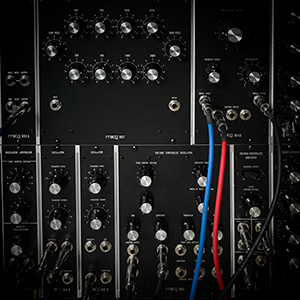
Early electronic instruments were big, and in the 50s and 60s, a typical setup for electronic composition and recording would have taken up most of a room. Robert Moog changed all that when he started building more compact systems where a set of sound generation and manipulation modules could be selected and worked with. These instruments not only made it possible for musicians to perform electronic music live — and even to take it on tour — but they gave rise to much of the basic tonal vocabulary that's used in electronic music to this day.
This instrument is a IIP — "II" for the number of independent voices it uses, "P" to indicate that it's the Performance version, optimised for transport and touring. Although it's enormous by modern standards, this — along with its phenomenal sound — is an advantage: its large controls and simple layout make it a superbly tactile instrument that lends itself to live performance and human interaction as opposed to just programming and playback.
Classic: Wendy Carlos is one of the pioneers of electronic music: her reinterpretations of Bach in the 1960s helped to establish the Moog Modular as a credible instrument, with the instrument's timbral versatility helping to separate Bach's contrapuntal lines in a different but no less effective way to how a piano player would differentiate them through dynamics. A similar instrument — no 2 Moog Modulars are exactly alike — is also used on the title track from Tangerine Dream's Phaedra album.
Contemporary: Hans Zimmer is a longtime Moog Modular aficionado, with a huge custom version of the instrument that he's used for soundtrack work — most recently in the Dune series.
Club: A smaller version of the IIP, the Model 10, is all over German producer Hannes Bieger's Lose Control, particularly the bass ostinato that runs throughout the track, showcasing the instrument's ability to move from subtle percussive lines (as in the intro), to more vocal melodic phrases.