
MOTM
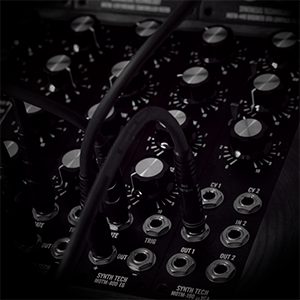
Paul Schreiber, the designer of the MOTM series of modules, was one of a handful of individuals who revived the modular synthesiser industry in the late 90s. Along with Dieter Doepfer, whose inventions eventually birthed the Eurorack, Schreiber resurrected and refreshed classic designs to make them ready for the 21st century. MOTM stands for "Module of the Month", as these synths were originally sold in kit form as part of a regular series of new module releases. However, there's nothing DIY about the design: it's based on a similar form factor to the one used by Moog modulars, but modernises and significantly extends its functionality to offer unparalleled tuning stability and flexible FM sound generation as well as more traditional subtractive synthesis, all supported by military-grade components engineered to be used for decades and easily repaired. Ours has 3 VCOs that can be used completely independently for 3-voice polyphony, as well as 4 different filters for tonal variety, based on those in the Prophet 5 V2, Korg MS-20, Arp Odyssey and Yamaha CS-80.
Classic: The MOTM has less heritage than many of the other synths here, but it's had an equally varied history. Robert Rich's Bestiary, released in 2001, is an astonishing piece of sound design, using a very large MOTM to create the sounds of an imaginary universe of exotic animals.
Contemporary: The MOTM's strengths in sound design are also very much evident in the soundtrack Kyle Dixon and Michael Stein created for Stranger Things, with the "monster/upside down" leitmotif being just one of the elements created on their MOTM.