
Oberheim OB-Xa
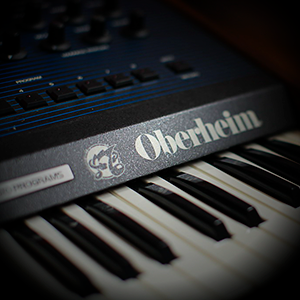
The OB-Xa and its successor, the OB-8, are the culmination of the trend towards portability and recallability that drove the analogue synth market in the 80s. That trend emphasised performance flexibility and immediacy of interaction over features and experimental flexibility, and as a result the OB-Xa is much more limited in its tonal vocabulary than earlier synths, with only 2 waveforms and a very constrained set of modulation routings. But that relatively limited vocabulary is always expressed in the grandest of terms, and only the Memorymoog can match the OB-Xa for the power and beauty of its raw sounds. Despite our jibe about it being limited, it can also, with a little imagination, also lend itself to more experimental sound design. But with a basic sound as good as this, why would you want to do anything different?
Classic: The OB-Xa's big, brash sound lends itself to a particular kind of big, brash music, and it's no surprise that it provides the foundation of Van Halen's Jump. However, Lisa Coleman used it to equally maximal effect but with considerably more sophistication on many tracks for Prince, including 1999.
Contemporary: The OB-Xa doesn't always have to be big and brash. Sam Shepherd's used both it and the OB-8 in the music he's made over the last decade as Floating Points; on Promises, the piece he made with legendary tenor saxophonist Pharoah Sanders, it provides sparse washes of sound supporting Sanders' questing, ever-evolving melodic lines.
Club: Martin Dubka has made a string of Italo and disco-inflected remixes of other artists over the last 10 years, from ones for Michoacan (those huge sweeping chords at the start are pure OB-Xa polyphonic glide) to Majestique, as well as helping produce work like Lou Hayter's Private Sunshine. His own work, like Love Hertz by his Circle Sky alias, also features the OB-Xa prominently.