
Prophet T8
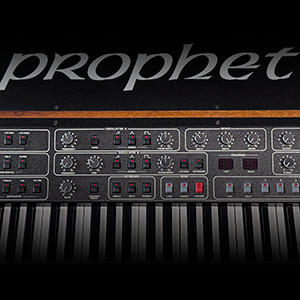
Sequential Circuits, the company that created the Prophet, had revolutionised the music industry in the mid 70s with the Prophet 5, the first polyphonic synth with full preset control. This allowed different sounds to be stored and switched between in performance, and it made the Prophet a mainstay of thousands of recordings across popular genres over the following years. The T8 was intended as the next step in that journey, using the sound generation capabilities of the Prophet 5 but coupling them with a properly grown up, touch sensitive keyboard as expressive as the ones on concert pianos. It ended up being hugely expensive to develop, and as a result less than 1000 were ever produced. We feel that it was years ahead of its time, and that only in recent years — decades after the T8 was produced — have there been synths with keyboards that allow for a similar degree of expressive control. If piano is your primary instrument, the T8 is a great place to try something more switched on: the full-size keys are unlike the springy plastic ones used on most synths, and not only are they weighted like a piano's, but they're also velocity sensitive so that the synth's filter and volume envelopes respond to the dynamics of your playing in a way that will feel very familiar and much more organic.
Classic: Pete Namlook was one of the pioneers of a range of experimental, downtempo or deep listening styles that are generally labeled "ambient", collaborating with everyone from Tangerine Dream's Klaus Schulze — another pioneer in this area — to Richie Hawtin and Speedy J. On Sultan, the work he released in the 90s with Burhan Öçal, the T8 is one of a range of contemporary synths providing the album's dense pads. In the mainstream, the T8 was famously used as one of the sound sources for the repeated two-chord figure in Tears for Fears' Everybody Wants to Rule the World.
Contemporary: Tom Holkenburg records and scores as Junkie XL, and there aren't many synths that he hasn't played. He used a T8 — along with many others — in his soundtrack production work throughout the 2010s, including for the Netflix series White Lines.